

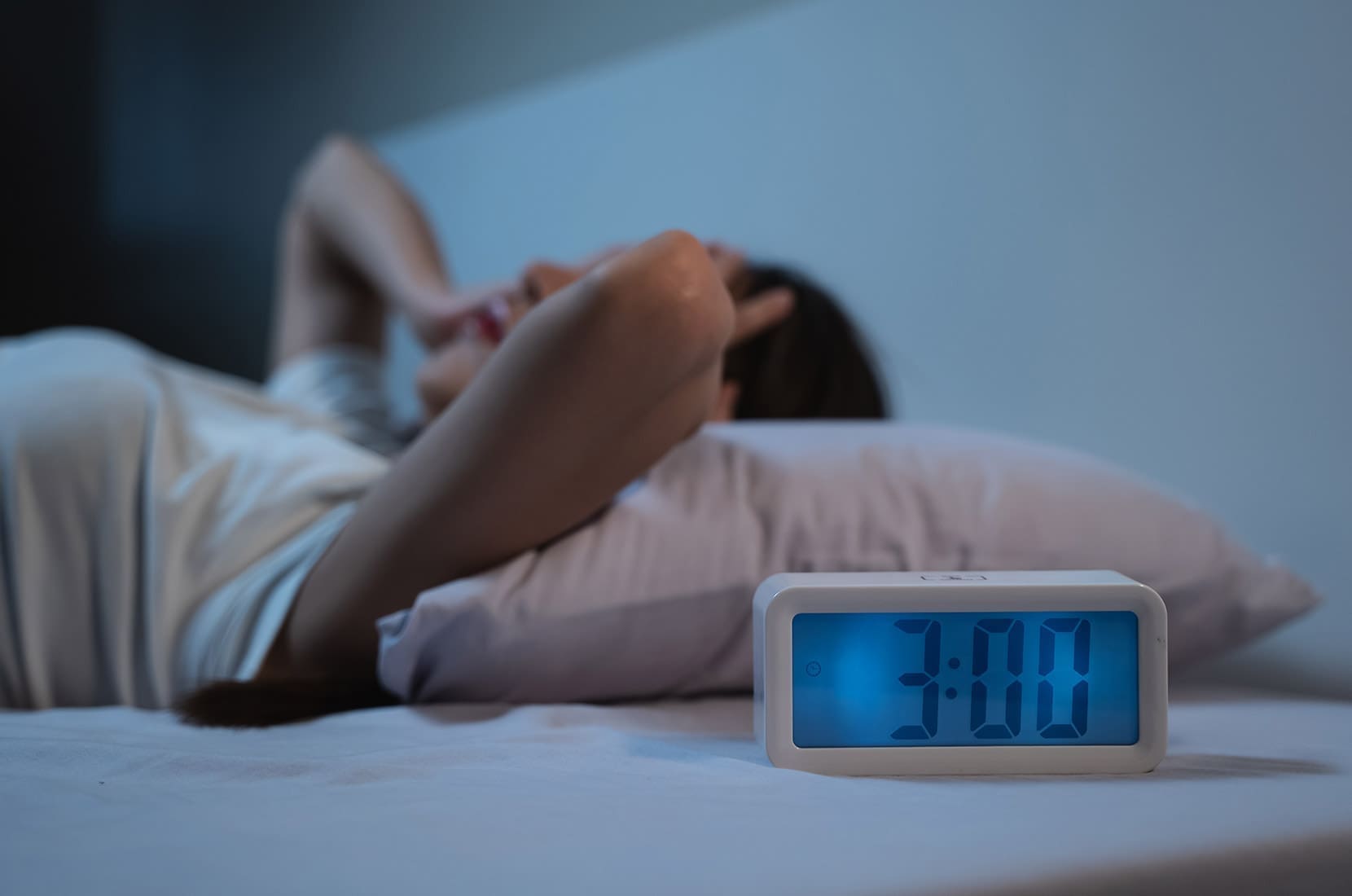
Falling asleep isn't the problem. You get into bed at a reasonable hour, you wind down, and sleep comes without much of a fight. But then, somewhere in the middle of the night, everything changes. It is 2 or 3 in the morning, the house is quiet, and your mind has no interest in being quiet with it. You lie there tossing and turning, running through whatever you can think of to bring yourself back to sleep, and none of it works. The clock moves slowly. Morning eventually arrives, but it doesn't feel like rest. It feels like you spent the night negotiating with your own body, and came out on the losing end.
You've probably chalked it up to stress. Life is full of it, the mental load doesn't lighten as the years go on, and stress does genuinely affect sleep. So when you can't get through the night, stress becomes the ready explanation. It makes sense. But if this is happening consistently, if it's the same window almost every night and falling asleep was never really your issue, stress may not be telling the whole story.
Starting in the mid-to-late 30s, women's hormones begin to shift, and progesterone is typically the first hormone to start declining. That decline tends to accelerate through the 40s, and it matters for sleep more than most women are ever told, because progesterone is the calming hormone. It has a quieting, settling effect on the nervous system, and when levels begin to drop, that natural quality starts to go with them.
The pattern this creates in sleep tends to be consistent and recognizable. You fall asleep without much trouble, because the ability to fall asleep is not primarily progesterone-driven. But a few hours into the night, somewhere around 2 or 3 in the morning, something shifts. Your body can't hold you under the way it used to. You surface from sleep, your mind comes fully online, and getting back to sleep becomes a real struggle. The rest of the night turns into a cycle of half-sleep and wakefulness that leaves you feeling like the morning arrived despite you rather than for you. This isn't random, and it isn't a reflection of how much stress you're under or how consistent your sleep habits are. It is a specific biological pattern, and it is one of the most common things women over 40 describe.
Stress gets the blame for a lot of things in this season of life, and there is good reason for that. It genuinely does affect how you sleep, and for most women in their 40s, stress is not exactly in short supply. When sleep starts to fall apart, stress is the most logical explanation available, and it can be easy to accept without examining it further, especially when life is busy and the explanation feels plausible.
But the way stress typically affects sleep looks a little different from what you are describing. Stress tends to disrupt sleep from the beginning of the night, making it hard to fall asleep or keeping sleep thin and unsettled all the way through. The pattern of falling asleep just fine and then waking up at 2 or 3 in the morning, in the same window night after night, unable to get back to sleep, points somewhere more specific. The timing matters, as does the consistency of the pattern, and so does the fact that falling asleep was never actually your issue to begin with. Put those details together and they are not pointing at your circumstances. They are pointing at your hormones.
When progesterone is restored, something shifts. The restlessness that has been pulling you out of sleep in the middle of the night starts to quiet. Your body finds its way back to the kind of sleep it used to know, the kind where you actually stay under, where the night passes instead of dragging, and where morning comes and it feels like something you arrived at naturally rather than something you spent the night working toward.
This is not hard to fix, and it doesn't require making peace with exhaustion as your new normal or accepting that this is just what your 40s look like now. Progesterone replacement is a relatively simple intervention, done with either a topical cream or a capsule taken at night, both of which work by restoring the hormonal rhythm your body has been missing. When that rhythm returns, your sleep tends to follow. And when you are sleeping through the night consistently again, the difference in how you feel throughout the next day is real and significant. Sleep is not a small variable, and when it comes back, you feel it across the board, in your energy, your focus, your mood, and your sense of being like yourself again.
If any of this sounds familiar, if you have been waking up at 2 or 3 in the morning wondering why sleep stopped working the way it used to, it may be worth asking whether your progesterone has ever been evaluated. It is a simple question, and it might be the one that finally leads you back to the kind of rest you have been missing.